Abuja Property Investment: The City Is Changing
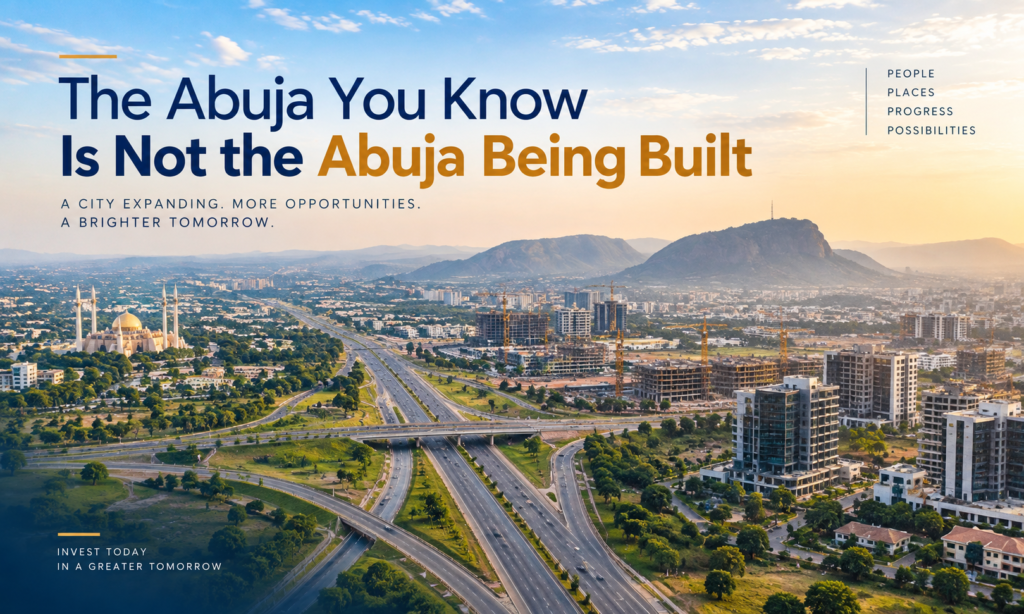
Abuja property investment used to follow a simple map. If you have lived in Abuja for a while, you probably know it already. Central Area means business. Wuse means shopping and meetings. Maitama and Asokoro mean prestige. Garki means established. Gwarinpa means residential. But that map is changing fast.
Not just physically. Economically. Socially. Commercially.
The city is gradually becoming less dependent on a single central core as new roads, residential communities, commercial developments and infrastructure begin to create new centres of activity across the Federal Capital Territory.
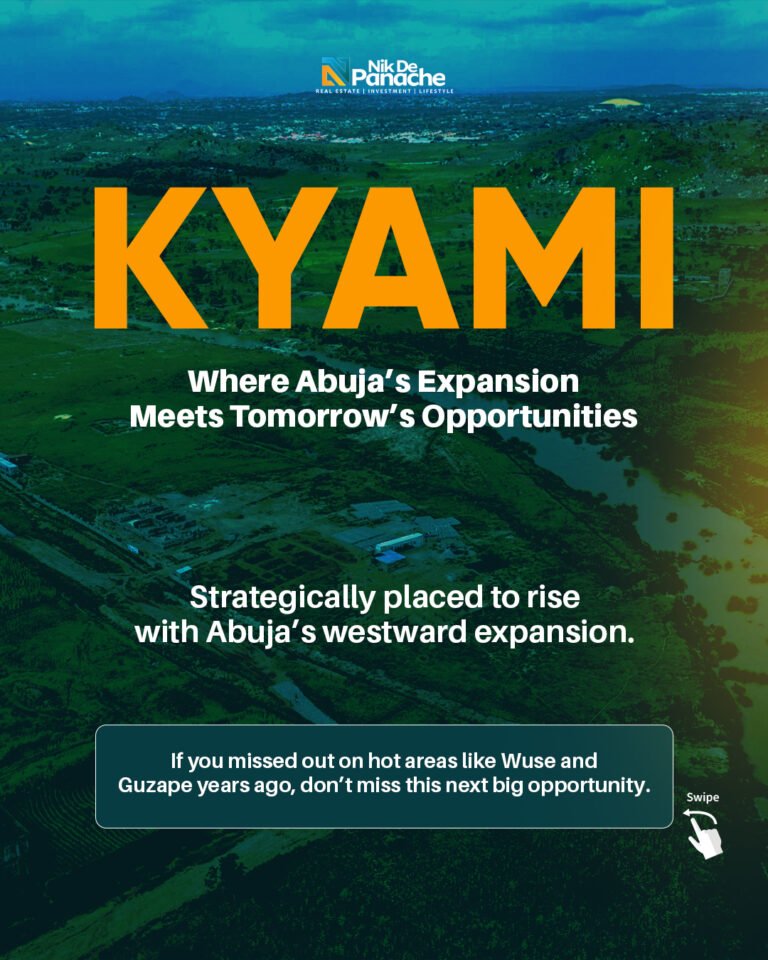
In fact, recent commentary on Abuja’s urban development points towards a more polycentric city—one where several districts and satellite communities develop their own economic and residential importance rather than everything revolving around the traditional city centre. Areas including Airport Road, Kyami, Kuje and the Apo/Karshi axis have been identified as corridors likely to experience increasing commercial and residential activity.
That changes the question property buyers should be asking.
Instead of simply asking: “Where is Abuja expensive today?” A smarter question is: “Where is Abuja being built for tomorrow?”
Abuja Is Expanding Beyond the Map We Grew Up With
For years, conversations about Abuja property have focused heavily on established districts, and understandably so.
Established locations have proven demand, existing infrastructure, businesses, schools, social amenities and recognisable addresses.
But cities do not remain static.
As established areas become more expensive and increasingly built-up, development naturally begins to move outward. That is already becoming visible across the FCT.
The Federal Capital Development Authority began preparations in 2026 for a comprehensive review of the Abuja Master Plan, citing the need to address challenges associated with the city’s development and to incorporate housing, transportation and other socio-economic realities into future planning.
At the same time, significant infrastructure projects are extending connectivity beyond the traditional city core, including the Airport–Kuje corridor, roads around satellite towns and other arterial routes intended to improve movement across the FCT.
This matters because infrastructure changes the meaning of distance.
A place that once felt too far away can become much more accessible when the road network improves.
And when accessibility improves, people start asking different questions. Developers start asking where they can build. Businesses start asking where customers will be. Families start asking where they can afford more space. Investors start asking where demand could emerge next.
That is how new parts of a city begin to move from “far away” to “where everyone is looking.”
The Airport Corridor Is a Good Example
Consider the Airport Road axis. For many Abuja residents, Airport Road was traditionally understood primarily as the route to the airport. But that description is becoming increasingly inadequate.
The corridor is developing into something much larger: a significant residential, commercial and infrastructure corridor connecting different parts of the FCT.
Recent infrastructure developments around the Airport–Kuje axis and the wider Airport Road corridor reinforce its growing importance to movement and development across Abuja.
And within this wider corridor are locations such as Kyami and the Centenary City axis.
These are not simply names appearing on property flyers anymore. They are becoming part of the conversation about where Abuja’s next phase of growth could happen. That distinction is important.
Because property value is not only about what exists around a location today. It is also about understanding what is being built around it, who is moving towards it, and how accessible it is becoming.
So, What Does This Mean for the Average Abuja Resident?
You do not have to be a property investor to care about how Abuja is changing.
The city’s growth affects ordinary decisions.
Where will you live?
How long will your daily commute be?
Can you afford a larger home without moving too far from the city?
Will the neighbourhood have the infrastructure your family needs?
Where will businesses open?
Where will schools, recreational spaces and commercial centres develop?
And perhaps most importantly:
If you buy property today, what kind of neighbourhood will surround it five or ten years from now?
This is why location should not be reduced to a postcode or a popular district name.
A genuinely strategic location should be evaluated in context.
1. Accessibility
How easily can you get in and out?
What major roads connect the area?
Is connectivity improving?
2. Infrastructure
Are roads, drainage, electricity, water, security and other essential services being planned or developed?
3. Development Direction
Is development moving towards the area—or away from it?
Are businesses, institutions, residential communities and infrastructure appearing around the corridor?
4. Liveability
A property is not just an asset on paper.
People have to live there.
That means green spaces, security, utilities, recreation, convenience and community matter.
5. Long-Term Relevance
The best property decision is not necessarily the one that looks impressive today.
Sometimes, it is the one that still makes sense as the city around it evolves.
This Is Where the Estate Developer Matters
There is an important part of this conversation that is often overlooked.
When buying property in an emerging part of Abuja, you are not simply buying land.
You are buying into a development vision.
That makes the developer’s approach important.
What are they actually building?
What infrastructure is planned?
What is the intended use of the community?
How has the location been selected?
What documentation supports the development?
And perhaps most importantly:
Are they building for today’s market or for tomorrow’s Abuja?
This is one of the principles behind the way Nik De Panache approaches development.
Across its projects, the focus has increasingly been on planned communities rather than isolated plots—bringing together location, infrastructure, accessibility, security and lifestyle considerations.
Take De Panache Smart City in Kyami.
The development is positioned as a planned residential and mixed-use community with features including internal roads, drainage, street lighting, integrated utilities, recreational and green spaces, controlled access and documented plots with a registered Right of Occupancy.
The thinking is simple:
A property should not exist in isolation from the life that will happen around it.
The same principle can be seen in Prime Haven Estate, also within the Kyami Airport Corridor.
The estate is positioned around structured residential development, controlled access, internal roads, drainage, green zones and utility-ready plots, with its location giving residents access to the Airport Expressway and key parts of Abuja.
And further along the Airport Road growth corridor is Omnia Prime, positioned beside Centenary City.
Its planned features include a landscaped boulevard, central park, waterfront, wellness centre and e-driving infrastructure, reflecting a broader idea of what a modern residential community can look like.
These developments illustrate something bigger than individual property offerings.
They reflect a particular way of looking at Abuja:
Growth should not only create more buildings. It should create better places to live.
The New Abuja Will Not Be Defined Only by the City Centre
One of the biggest mistakes a property buyer can make is assuming that the Abuja of tomorrow must look exactly like the Abuja of yesterday. It won’t.
As infrastructure extends, population grows and new communities develop, the boundaries of what people consider “Abuja” will continue to evolve.
Some locations that currently feel peripheral may become everyday residential and commercial destinations.
Some roads that currently feel like routes between places may become economic corridors in their own right.
And some communities that people currently describe as “developing areas” may eventually become established neighbourhoods.
This does not mean every developing location will automatically become a great investment.
It does not mean every piece of land outside the city centre will appreciate.
And it certainly does not mean buyers should purchase property simply because someone says an area is “the next big thing.”
That is precisely why due diligence still matters.
Growth must be supported by real infrastructure, proper planning, credible documentation, accessibility and genuine demand.
The Question Is No Longer Just “Where Is Abuja?”
The more important question is: “Where is Abuja going?”
That is the conversation property buyers, homeowners and investors should be having.
Because the city is not waiting for us to finish making decisions before it changes.
It is already changing.
New roads are changing accessibility. New communities are changing where people live. New commercial centres are changing where people work and spend. New infrastructure is changing how we understand distance. And developers are increasingly being challenged to think beyond selling plots and instead create environments people can actually build lives in.
At Nik De Panache, that is the direction we believe real estate should take.
We don’t just build properties. We build secure investments. We build thriving communities.
And as Abuja enters its next phase of growth, the smartest property conversations may not be about where everyone is buying today. They may be about where the city is going next.
Your Abuja Is Changing. Is Your Property Strategy Changing With It?
Whether you are buying your first property, looking for a family home, planning your next investment or simply trying to understand where Abuja is heading, pay attention to the corridors being connected, the communities being planned and the infrastructure being developed.
Because the Abuja you know is not necessarily the Abuja you will live in five or ten years from now.
The city is being built as we speak.
The question is: Will you only notice when it is finished—or will you understand the opportunity while it is still taking shape?
Nik De Panache Limited
We build secure investments. We build thriving communities.